The countdown reaches zero, the rocket clears the tower, and the broadcast fills with applause. It is a compelling moment. It is also only one part of the story a space mission needs to tell.
A useful mission update identifies the milestone that was achieved and the work still ahead. That distinction helps readers follow the engineering without treating every announcement as either total success or total failure.
This is a reading guide, not a report of a new launch. The James Webb Space Telescope provides a documented historical example.
A spacecraft can launch before it unfolds
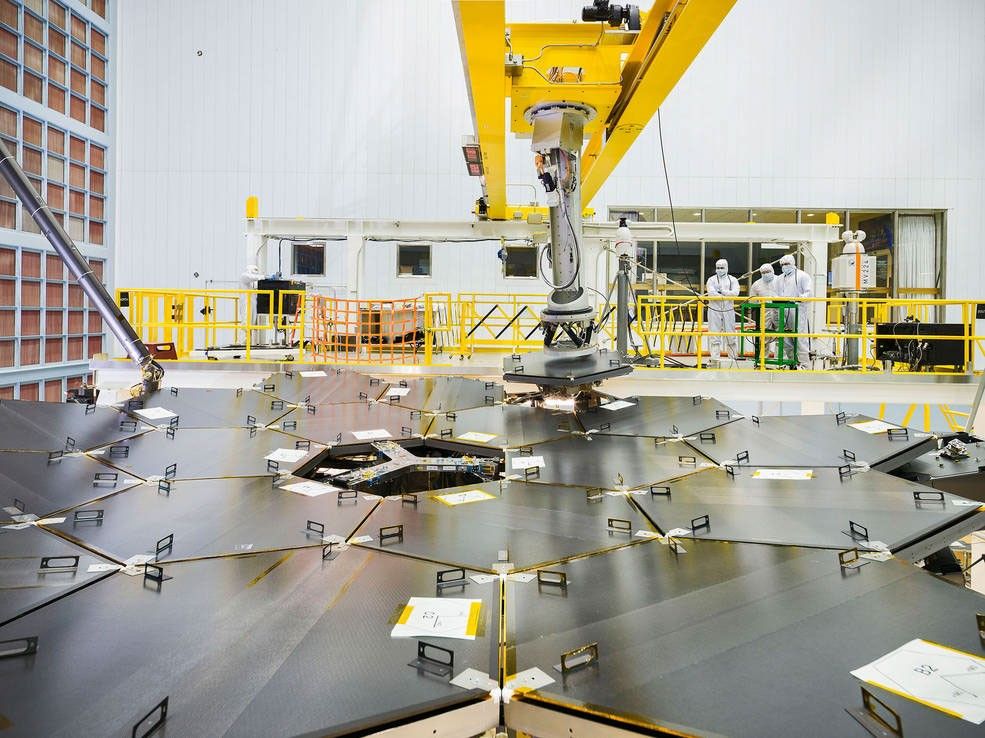
Webb launched in 2021 in a folded configuration. NASA's deployment account describes a sequence of unfolding operations after launch, including the observatory's sunshield and mirror structures. Those operations were essential parts of the mission rather than decorative additions to the flight. [1]
The example shows why a launch headline needs a boundary. A successful rocket flight can establish that one demanding phase worked while leaving demanding spacecraft operations ahead.
When following another mission, look for its own sequence. Do not copy Webb's timeline onto a communications satellite, lunar lander, crewed flight, or planetary probe. Their objectives and definitions of success differ.
Ask what the rocket delivered
Find the mission's stated destination and the milestone the operator has confirmed. Did the update concern liftoff, an orbital insertion, spacecraft separation, or communication with the payload?
Those statements answer different questions. The absence of one from an early update is a reason to wait for more information, not evidence that it failed.
Keep planned events separate from confirmed events. A scheduled separation is not a confirmed separation. An animation of the intended journey is a useful explanation of the plan, not telemetry demonstrating that the spacecraft followed it.
Arrival can be another beginning
NASA explains that Webb took roughly 30 days to reach the start of its orbit around the Sun-Earth L2 region. Its destination and operating geometry differ from a spacecraft simply circling Earth. [2]
That historical timeline makes a practical point: the launch date alone does not establish the date a mission becomes ready to do its work.
For the mission being covered, ask which deployment, checkout, calibration, or commissioning activities its own documentation requires. Use the operator's published milestones rather than assuming a universal interval between launch and useful operations.
Read the business claim separately
A flight milestone and a commercial claim need different evidence. If an announcement also discusses launch frequency, customer demand, or costs, identify the documents supporting those statements.
A proposed flight schedule is a plan. A signed contract, a delivered mission, and money recognized as revenue describe different business events. Avoid turning an impressive launch video into a financial conclusion without that additional information.
Likewise, a scientific mission should be judged against its stated objectives. A technical demonstration may deliberately accept a different risk profile from a routine service mission. Find those objectives before interpreting a short success label.
Build a small milestone ledger
For any launch story, record the planned event, its confirmation source, the timestamp, and the next announced checkpoint. Leave a row marked unconfirmed when there is no reliable update.
Prefer the mission operator's technical updates and relevant agency material, while making clear whose assessment is being reported. Correct the ledger when better information arrives.
That approach leaves room for excitement without losing precision. Liftoff deserves attention. Readers also deserve to know whether the story concerns the rocket's journey, the spacecraft's readiness, or the mission's eventual results.
Sources
[1] NASA: Webb deployment (https://science.nasa.gov/mission/webb/deployment/)
[2] NASA: Webb orbit and journey to L2 (https://science.nasa.gov/mission/webb/orbit/)